

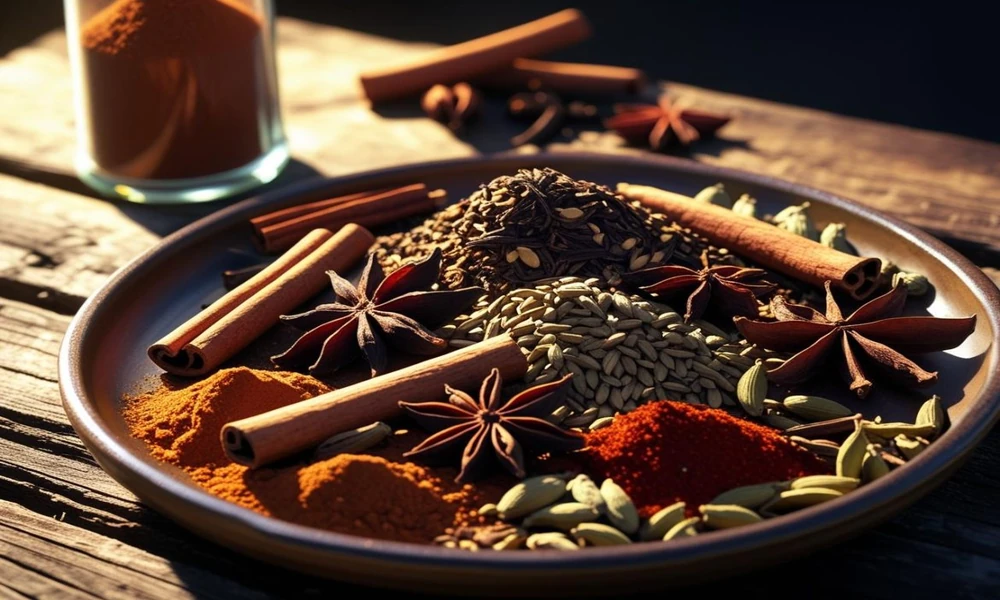
Masala is one of the most recognizable elements of South Asian cuisine. Its influence now reaches many cultures. The term does not describe one fixed spice blend. Instead, it refers to combinations of spices that may be roasted, ground, mixed, or added at different stages of cooking. Masala became both a culinary tradition and a flexible idea that could travel across cultures.
Early Trade Made Spices International
The global story of masala began long before modern restaurants existed. South Asia was connected to trade networks linking India with the Middle East, Southeast Asia, and Europe. Pepper, cardamom, cinnamon, cloves, turmeric, and other spices moved through ports and trading cities as valuable ingredients.
What travelled first was not always the complete concept of masala, but the individual spices used to create it. Over time, merchants, cooks, and communities became familiar with the aromas and flavours associated with South Asian food.
The popularity continues today. A search for indian restaurant bangkok, for example, shows how easily spice traditions now appear in major Asian city. Bangkok diners can find curries, biryani, tandoori dishes, and masala-based recipes alongside Thai, Japanese, Chinese, and European food. This shows how masala moved from a regional tradition into an internationally recognized flavour profile.
Colonialism Changed How Masala Travelled
British colonial contact with India created stage. British traders and officials developed a taste for dishes, but reproducing spice combinations abroad was not always convenient.
Curry powder became a simplified solution. Instead of preparing several spices separately, consumers could buy a standardized mixture. This made Indian-inspired cooking easier to reproduce in Britain and elsewhere in the British Empire.
However, this also changed the meaning of the original cuisine. Curry powder represented a interpretation of Indian spice traditions rather than one authentic Indian masala. It was easier to export, store, and explain to unfamiliar diners.
Migration Carried Recipes, Not Just Spices
Migration spread masala more because people carried knowledge with them.
South Asian communities settled in Britain, East Africa, South Africa, the Caribbean, North America, . They brought spices and techniques for roasting, grinding, tempering, and balancing them.
A jar of spices can travel easily, but knowing when to add cumin, how long to toast coriander, or how much garam masala belongs at the end of a dish comes from cooking experience.
As communities adapted to local ingredients, styles emerged. Indian food in South Africa, the Caribbean, and Britain developed identities of their own while retaining South Asian foundations.
Different Countries Created Their Own Versions
Japan provides one of the clearest examples of adaptation.
Curry reached Japan largely through British influence during the Meiji period. Japanese cooks transformed it into a thicker, milder sauce commonly served with rice. Later, packaged curry roux made the dish even more accessible for home cooking.
The result is now considered Japanese comfort food rather than simply a foreign Indian dish.
Similar transformations happened elsewhere. Caribbean curries incorporated regional peppers and ingredients, while British curry houses developed dishes adjusted to local preferences. Masala became part of several national food cultures without remaining identical everywhere.
Restaurants Made Masala Mainstream
Restaurants played a major role in turning these flavours from immigrant food into everyday dining.
In cities such as London, Toronto, Dubai, Singapore, Bangkok, and New York, Indian and South Asian restaurants introduced diners to spice combinations that once seemed unfamiliar. Over time, words such as tikka masala, garam masala, masala chai, and masala dosa entered international food vocabulary.
Restaurants also helped customers understand that masala does not simply mean “spicy.” A masala can be aromatic, earthy, warm, sweet, smoky, or intensely hot depending on its ingredients and preparation.
Masala Keeps Evolving
Masala became globally successful partly because it could change without losing its identity.
Its combinations vary by region, household, dish, and culture. Trade introduced the spices, migration carried the techniques, restaurants made the flavours accessible, and local communities reshaped them.
Today, masala represents more than one ingredient. It is a culinary language built from spice, history, and adaptation. Its worldwide popularity shows how a regional cooking tradition can travel across continents, change with environments, and remain recognizable generations later.
