

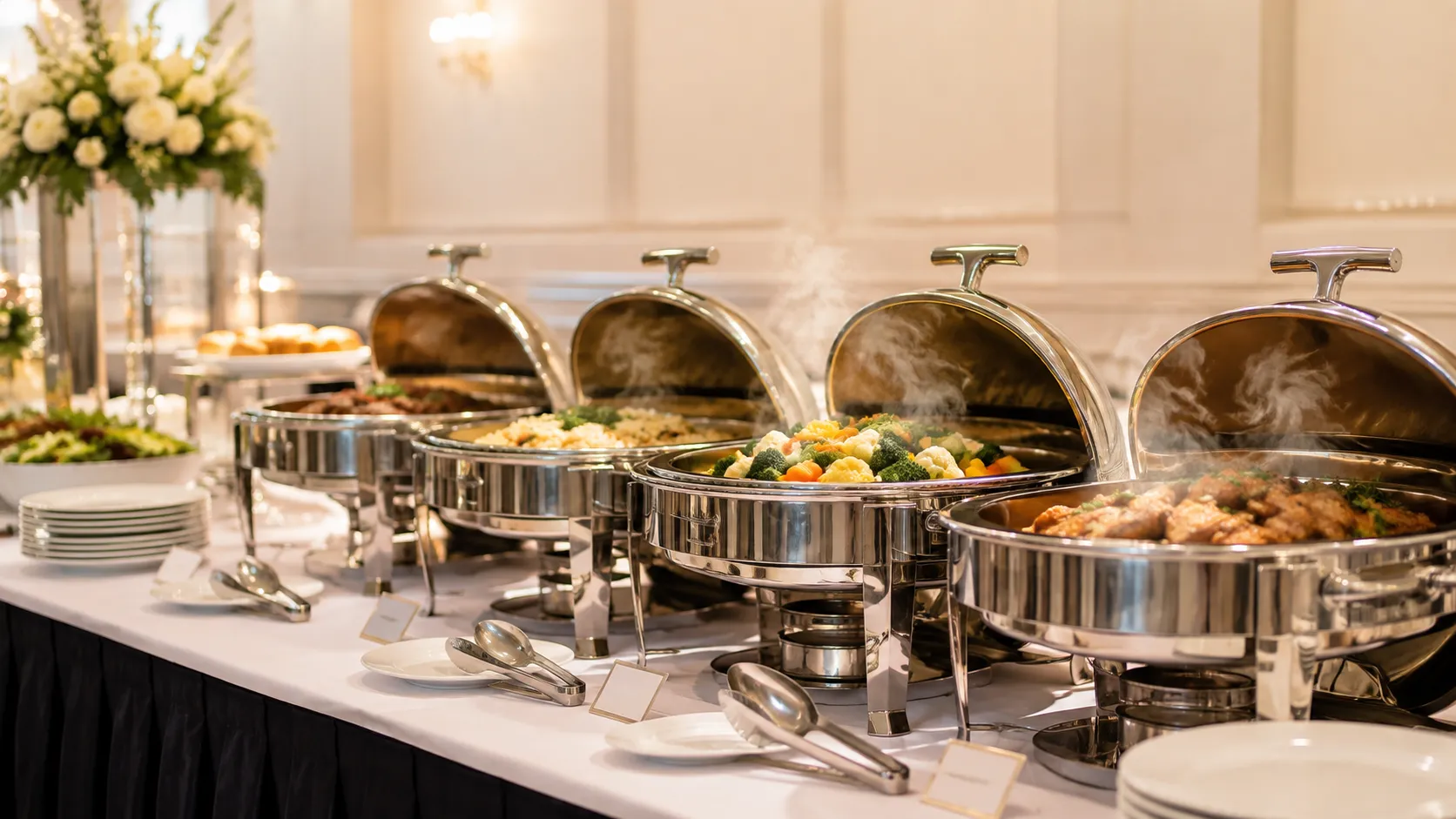
Serving a buffet sounds simple until the first tray of food starts losing heat. Whether you are preparing a wedding reception, family gathering, corporate lunch, or outdoor celebration, keeping cooked dishes warm without drying them out can be a challenge. This is where a chafing dish becomes one of the most useful pieces of equipment on the table.
Unlike ordinary serving trays, chafers are designed to maintain heat while allowing guests to serve themselves comfortably. With the right chafing dish setup, hot food can remain presentable, appetizing, and ready throughout the meal.
However, simply lighting a heat source beneath a pan is not enough. Water levels, food preparation, serving time, temperature monitoring, and placement all matter. Understanding these basics can make buffet service smoother while helping food retain its texture and flavor.
What Is a Chafing Dish and How Does It Work?
A chafing dish is a heated serving system commonly used at buffets and catered events. Most traditional models have a frame, water pan, food pan, lid, and heat source.
Instead of placing the food directly over a flame, hot water sits beneath the food pan. The heated water creates gentle, consistent warmth around the pan. This indirect heating method reduces the risk of scorching and makes the unit useful as a catering food warmer.
A standard arrangement normally includes:
- A stable metal frame
- A deep water pan
- A removable food pan
- A fitted or roll-top lid
- Fuel holders or another heating system
- Serving utensils
Because of this simple construction, chafers are widely used as buffet serving equipment for everything from breakfast dishes to pasta, vegetables, rice, meat, and sauces.
Why Buffets Need Reliable Food-Warming Equipment
Food quality can change quickly after cooking. A creamy pasta dish may become stiff, grilled meat may cool faster than expected, and sauces may develop an unpleasant surface layer.
A buffet warmer helps slow these changes by maintaining a steady environment around the food.
Imagine serving lunch for 50 guests. The first group arrives at noon, but some people do not eat until 12:45. Without warming equipment, the later guests may receive food that feels noticeably different from what was served at the beginning.
Reliable warming equipment helps create more consistent service from the first plate to the last.
It also makes the serving table more organized. Instead of repeatedly moving trays back to the kitchen for reheating, staff can focus on replenishing food, cleaning the service area, and assisting guests.
How to Prepare the Right Chafing Dish Setup
A successful chafing dish setup should begin before guests approach the buffet.
Fill the Water Pan Correctly
The bottom pan should contain enough hot water to provide consistent heat without overflowing once the food pan is inserted.
Starting with warm or hot water is usually more practical than filling the pan with cold water because the unit can reach its working temperature faster.
Check the water occasionally during longer events. If too much evaporates, the pan can become dry and food may heat unevenly.
Add Food That Is Already Hot
One of the most common mistakes is expecting the chafer to cook or reheat cold food.
Its main purpose is heat retention.
Food should normally be cooked and heated in the kitchen before being transferred into the serving pan. A catering food warmer works much better when it only needs to maintain existing heat rather than raise cold food to serving temperature.
Position the Heat Source Safely
Fuel holders should sit evenly beneath the water pan. Keep them away from table decorations, napkins, loose fabrics, and anything else that may present a fire risk.
If an electric unit is being used, place cables where guests and staff will not trip over them.
Understanding Food Temperature for Catering
Maintaining warmth is not just about comfort. Temperature is also an important part of responsible food service.
Requirements can vary depending on local food-safety regulations, so professional caterers should always follow the rules that apply in their region. In general, hot foods should be held at a temperature considered safe by the relevant local authority rather than simply kept “warm to the touch.”
Monitoring food temperature for catering with a suitable food thermometer can provide a much more reliable indication than guessing by appearance.
Check thicker foods in several locations, especially when:
- A new pan has just been placed on the buffet
- Food has been sitting for an extended period
- The heat source has recently been replaced
- A tray has been refilled
- Guests have frequently opened the lid
Proper monitoring is especially useful at larger events where several dishes are being managed at the same time.
Choosing the Right Type of Chafing Dish
Not every event requires the same style.
Rectangular models are popular because they can hold substantial portions and fit naturally into buffet lines. Round models work well for soups, curries, sauces, and side dishes. Smaller models can be useful when serving multiple dishes in limited space.
When comparing buffet chafing dishes, consider the amount of food being served, the available table space, the number of guests, and how frequently each dish will need to be replenished.
A smaller tray may work better for foods that should be refreshed frequently, while a larger pan can make sense for high-demand dishes such as rice or roasted vegetables.
How to Keep Food Warm Without Drying It Out
Heat solves one problem but can create another.
Leaving food over heat for too long may gradually reduce moisture. Rice can become firm around the edges, meat may lose tenderness, and sauces can thicken.
The goal is not maximum heat. It is controlled heat.
A few practical habits can help.
Keep Lids Closed When Possible
Constantly leaving a lid open releases both heat and moisture. Encourage guests or servers to close lids after serving.
Stir Suitable Dishes Occasionally
Foods such as curry, sauce, pasta, vegetables, or rice may benefit from gentle stirring. This distributes moisture and warmth more evenly.
Use Smaller Batches
Rather than loading an enormous quantity into one pan, refill the tray with freshly heated food as needed.
This approach can improve presentation and reduce the amount of food sitting over heat for long periods.
Watch Delicate Foods
Not every menu item handles extended warming equally well. Fried foods, for example, can lose crispness when trapped steam softens the coating.
Plan the buffet according to how each dish responds to heat.
Organizing Buffet Serving Equipment for Better Guest Flow
Even perfectly heated food can create a poor buffet experience if the table is difficult to navigate.
Good buffet serving equipment should support a natural flow from plates to main dishes, sides, condiments, and utensils.
Place popular dishes where guests can access them without blocking the entire line. Leave enough space around each unit for opening lids and handling serving utensils safely.
If you are using several warmers, keep dishes logically grouped. For example:
- Rice beside curries or meat dishes
- Breakfast potatoes near eggs
- Pasta beside sauces
- Vegetables beside main courses
- Gravy near roasted meats
Clear labels are helpful as well, particularly when guests have dietary restrictions.
Chafing Dishes as Party Buffet Essentials
For hosts serving larger groups, chafers can become practical party buffet essentials rather than equipment reserved only for professional caterers.
Consider a family celebration where dinner is scheduled for 7:00 p.m. Some guests arrive early, others are delayed, and children may eat before the adults. Trying to serve every plate directly from the kitchen becomes stressful.
A warming station allows food to remain available while guests eat according to the pace of the event.
Other useful party buffet essentials may include:
- Heat-resistant serving utensils
- Food labels
- Extra napkins and plates
- Spare fuel where appropriate
- Thermometers
- Serving trays
- Table protection beneath hot equipment
Planning these details beforehand can prevent constant trips between the buffet and kitchen.
Common Chafing Dish Mistakes to Avoid
Even experienced hosts can run into problems when using warming equipment.
Using It to Reheat Cold Food
A buffet warmer should generally maintain properly heated food rather than act as the primary reheating appliance.
Letting the Water Pan Run Dry
Without enough water, heat may become uneven and the equipment can perform poorly.
Using Excessive Heat
More heat does not always mean better results. Excessive heating may cause food to dry out, stick, or change texture.
Filling Food Pans Too Early
Whenever possible, transfer food to the buffet reasonably close to serving time.
Ignoring Temperature Checks
Visual appearance cannot reliably confirm whether food is being maintained correctly. Monitoring food temperature for catering provides much better information.
How Many Chafing Dishes Do You Need?
The answer depends on your menu rather than simply your guest count.
If dinner includes rice, chicken, vegetables, potatoes, and pasta, those dishes may each require separate warming space. Sauces and smaller sides may be placed in divided pans when appropriate.
Think about:
- Number of hot menu items
- Portion sizes
- Expected guest count
- Refill frequency
- Buffet table size
- Serving duration
For larger gatherings, keeping replacement pans prepared in the kitchen can make service much easier.
Frequently Asked Questions
Can you cook food in a chafing dish?
A chafing dish is primarily designed for keeping prepared food warm. Cooking or reheating food should generally be handled with appropriate kitchen equipment before the food is transferred to the buffet.
Should you put hot or cold water in the water pan?
Starting with hot or warm water usually helps the system reach the desired warming condition faster. Always follow the instructions supplied with your specific equipment.
Why is my buffet food drying out?
Food may dry out when it is held for too long, exposed to excessive heat, or left uncovered. Using smaller batches, keeping lids closed, and monitoring moisture can help.
What foods work well in a catering food warmer?
Rice, pasta, vegetables, meat dishes, casseroles, curries, sauces, and many breakfast foods generally work well when properly prepared and managed.
Do I need a thermometer for buffet service?
A thermometer is a useful tool for checking whether hot food is being maintained appropriately. Professional caterers should follow the food-safety requirements applicable in their location.
Conclusion
A well-organized buffet is about more than putting food on attractive trays. Temperature, timing, moisture, table layout, and guest flow all influence how enjoyable the meal will be.
Using a chafing dish correctly provides a practical way to maintain hot dishes while guests serve themselves at their own pace. Start with properly heated food, prepare the water pan carefully, manage the heat source, monitor temperatures, and refill smaller quantities when possible.
Whether you are preparing a catered reception or assembling party buffet essentials for a family celebration, thoughtful planning can make service noticeably easier. The best buffet does not simply keep food warm—it keeps dishes appealing, accessible, and ready when every guest reaches the table.
